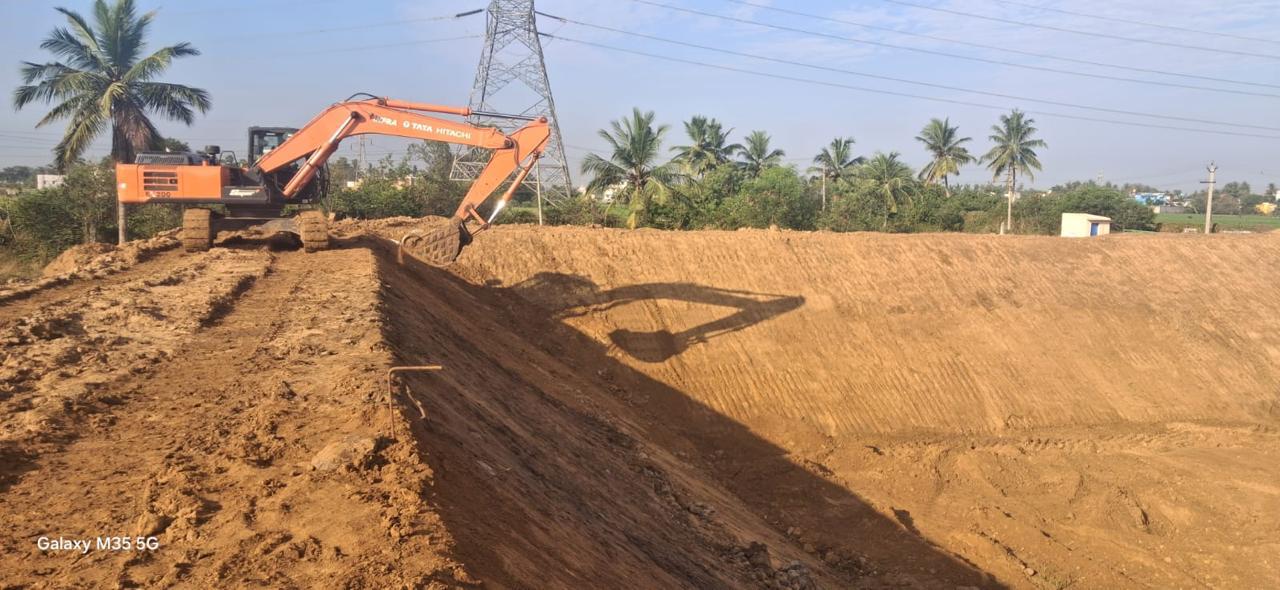
Importance of Ash Dyke Pond for Thermal Power Plants in India
Thermal power plants are one of the largest contributors to electricity generation in India, but they also produce significant quantities of coal combustion residues such as fly ash and bottom ash. Managing this waste efficiently is critical not only for operational continuity but also for environmental protection. This is where ash dyke ponds play a vital role.
An ash dyke pond is a scientifically engineered containment system designed to store and manage ash slurry safely. With increasing regulatory pressure and sustainability goals, thermal power plants are actively investing in robust ash management infrastructure. This has led to a growing demand for experienced ash pond contractors in India and reliable ash dyke construction companies in India that can deliver compliant and long-lasting solutions
What is an Ash Dyke Pond?
An ash dyke pond is a large engineered structure constructed using earthen embankments to contain ash slurry. It acts as a settling basin where ash particles deposit while water is separated and reused.
Key Components of an Ash Dyke Pond
- Embankment (dyke wall) for containment
- Ash slurry storage zone
- HDPE/geosynthetic lining system
- Decantation well system
- Water recovery and pumping system
These components work together to ensure efficient ash disposal, water recycling, and environmental protection.
Importance of Ash Dyke Pond for Thermal Power Plants
Ash dyke ponds are essential for maintaining environmental safety and operational efficiency in thermal power plants. Without proper ash management systems, plants risk contamination, regulatory penalties, and operational inefficiencies.
Key Importance Factors
- Secure containment of fly ash and bottom ash- Prevents uncontrolled dispersion and air pollution.
- Prevention of groundwater contamination- Use of HDPE lining and geosynthetics ensures minimal seepage.
- Regulatory compliance with CPCB norms- Helps meet environmental guidelines and avoid penalties.
- Supports sustainability initiatives- Enables water reuse and fly ash recycling.
- Improves plant efficiency- Reduces downtime and maintenance issues.
Impact Data (Industry Perspective)
- Thermal power plants in India generate over 200 million tonnes of fly ash annually.
- Proper ash pond systems can reduce water consumption by 30–40% through recycling.
- Advanced lining systems can reduce seepage risks by up to 95%.
This clearly highlights why working with experienced ash pond contractors in India is critical for modern power plants.
Consultancy and Design of Ash Dyke Ponds
Proper planning and design form the backbone of any successful ash dyke project. A professional ash dyke construction company in India ensures that every aspect of the project is optimized for safety, cost, and compliance.
The consultancy phase involves detailed site analysis, soil investigation, and environmental assessment. Based on this data, engineers develop a customized design that considers hydraulic behavior, seepage control, and long-term stability.
Key Consultancy & Design Services
- Feasibility studies and site selection
- Soil testing and geotechnical analysis
- Hydraulic modeling for water flow
- Seepage and stability analysis
- Environmental compliance planning
Design Benefits
- Optimized land utilization
- Reduced construction and maintenance costs
- Improved safety and durability
- Compliance with national and international standards
A well-designed ash pond significantly reduces future risks and enhances operational efficiency.
Construction of Ash Dyke Pond
Ash dyke construction requires precision engineering, proper material selection, and strict adherence to quality standards. Leading ash pond contractors in India follow a systematic approach to ensure long-term reliability.
The process begins with site preparation and foundation stabilization. This is followed by embankment construction using compacted soil layers to achieve structural strength. Lining systems such as HDPE geomembranes are then installed to prevent seepage.
Key Construction Steps
- Site clearing, grading, and compaction
- Embankment construction with layered earthwork
- Installation of HDPE lining and geotextiles
- Integration of drainage and hydraulic systems
- Testing, inspection, and commissioning
Construction Advantages
- High structural stability
- Long operational lifespan
- Reduced environmental impact
- Compliance with safety standards
In addition, many thermal plants require redevelopment or expansion of existing ash ponds, which requires specialized expertise from experienced contractors.
Decantation Well Arrangement and Uses
A decantation well is a crucial component of ash pond systems that helps manage water levels and maintain hydraulic balance. It ensures that excess water is removed without disturbing the settled ash.
Properly designed decantation systems improve efficiency and reduce environmental risks.
Key Functions of Decantation Wells
- Maintains water levels within safe limits
- Enables controlled discharge of supernatant water
- Reduces turbidity and improves water quality
- Prevents overflow and structural stress
- Ensures regulatory compliance
Efficient decantation systems are essential for maintaining the long-term performance of ash dyke ponds.
Recovery Pump Management
Recovery pump systems play a vital role in recycling water from ash ponds back into plant operations. This reduces water wastage and improves sustainability.
Efficient pump management includes proper selection, installation, and monitoring to ensure consistent performance.
Benefits of Recovery Pump Management
- Reduces freshwater consumption
- Lowers operational costs
- Improves system efficiency
- Minimizes downtime through monitoring systems
Operational Data
- Water recovery systems can recycle up to 70% of pond water
- Proper pump maintenance can reduce downtime by 40%
These systems are critical for achieving both economic and environmental benefits
Geosynthetics Material Use – Benefits
Modern ash dyke construction relies heavily on geosynthetics to enhance durability and environmental protection. Materials like HDPE liners and geotextiles play a key role in ensuring the integrity of ash ponds.
Common Geosynthetic Materials
- HDPE geomembrane liners
- Geotextile reinforcement layers
- Drainage geocomposites
Benefits of Geosynthetics
- Prevents seepage and groundwater contamination
- Enhances structural stability
- Extends lifespan of ash ponds
- Reduces maintenance costs
- Improves environmental compliance
By incorporating these materials, ash dyke construction companies in India deliver high-performance and sustainable solutions.
Best Engineering Practices
Successful ash dyke projects depend on following best engineering practices. These practices ensure safety, efficiency, and long-term reliability
Key Engineering Practices
- Advanced geotechnical analysis and soil stabilization
- Optimized design for efficient land use
- Use of high-quality materials and liners
- Reliable water management systems
- Continuous monitoring and maintenance
Key Outcomes
- Increased structural stability
- Reduced environmental risks
- Improved operational efficiency
- Long-term cost savings
Why Choose a Professional Ash Dyke Construction Company in India
Selecting the right contractor is one of the most important decisions in any ash dyke project. A professional ash dyke construction company in India ensures that the project is executed with precision and meets all regulatory standards.
What to Look For
- Proven project experience
- Expertise in EPC and turnkey solutions
- Strong understanding of environmental regulations
- Advanced technology and materials
- End-to-end service capability
Working with experienced ash pond contractors in India ensures high-quality execution and long-term performance.
Conclusion
Ash dyke ponds are a critical infrastructure component for thermal power plants, ensuring safe disposal of ash while protecting the environment and improving operational efficiency. With increasing environmental regulations and sustainability goals, the importance of well-designed and properly managed ash ponds continues to grow.
Key Takeaways
- Essential for safe ash containment
- Prevents groundwater contamination
- Ensures regulatory compliance
- Supports sustainability and water recycling
- Improves plant efficiency
GeoTech Buildcon Pvt Ltd stands as a trusted ash dyke construction company in India, offering expertise in ash pond design, construction, HDPE lining, geosynthetics, consultancy, and EPC solutions.